

Introduction
Hook: The joy of homemade bread
There’s something incredibly satisfying about pulling a warm loaf of bread out of the oven. The aroma fills your home, instantly transporting you to a cozy bakery. When you make Dutch Oven Sourdough Bread, you’re not just baking; you’re creating a moment of joy that can be shared with friends and family.
Brief overview of sourdough bread and its appeal
Sourdough bread is a beloved classic, known for its delightful crust and tangy flavor. The natural fermentation process not only enhances the taste but also contributes to its digestibility. Whether enjoyed fresh with a pat of butter or transformed into a gourmet sandwich, sourdough bread holds a special place in the hearts of food lovers.
Importance of homemade food for young professionals
For young professionals, juggling work and personal life can be challenging, making the act of cooking feel like a luxury. However, making homemade bread is not only a rewarding experience but also a way to reconnect with food. It provides a sense of accomplishment and a break from the fast-paced world. Plus, there’s nothing quite like the taste of something made from scratch, reminding us that we can create beauty even in our busy lives.
Key Ingredients
All-purpose flour
3 cups of all-purpose flour provide the essential structure and texture needed for the bread. This versatile ingredient helps achieve a chewy crumb and a beautifully crusty exterior, making it a staple in any bread recipe.
Warm water
1 1/4 cups of warm water is crucial for activating the sourdough starter and ensuring proper gluten formation. The warmth helps to create an optimal environment for fermentation, leading to a well-risen loaf.
Sourdough starter
1/2 cup of sourdough starter is the heart of this recipe, infusing the bread with its unique flavor and aiding in the rise. A healthy, active starter is key to achieving that signature tangy taste that sourdough lovers adore.
Salt
1 1/2 teaspoons of salt enhances the flavor of the bread while regulating yeast activity. It plays a vital role in strengthening the dough and improving its overall texture, ensuring a balanced taste in every bite.
Sugar
1 teaspoon of sugar aids in the fermentation process and promotes the browning of the crust. While it may seem minor, this ingredient helps the bread develop a rich color and adds a hint of sweetness to the finished loaf.

Why You’ll Love This Recipe
Discuss the flavor profile and texture of the bread
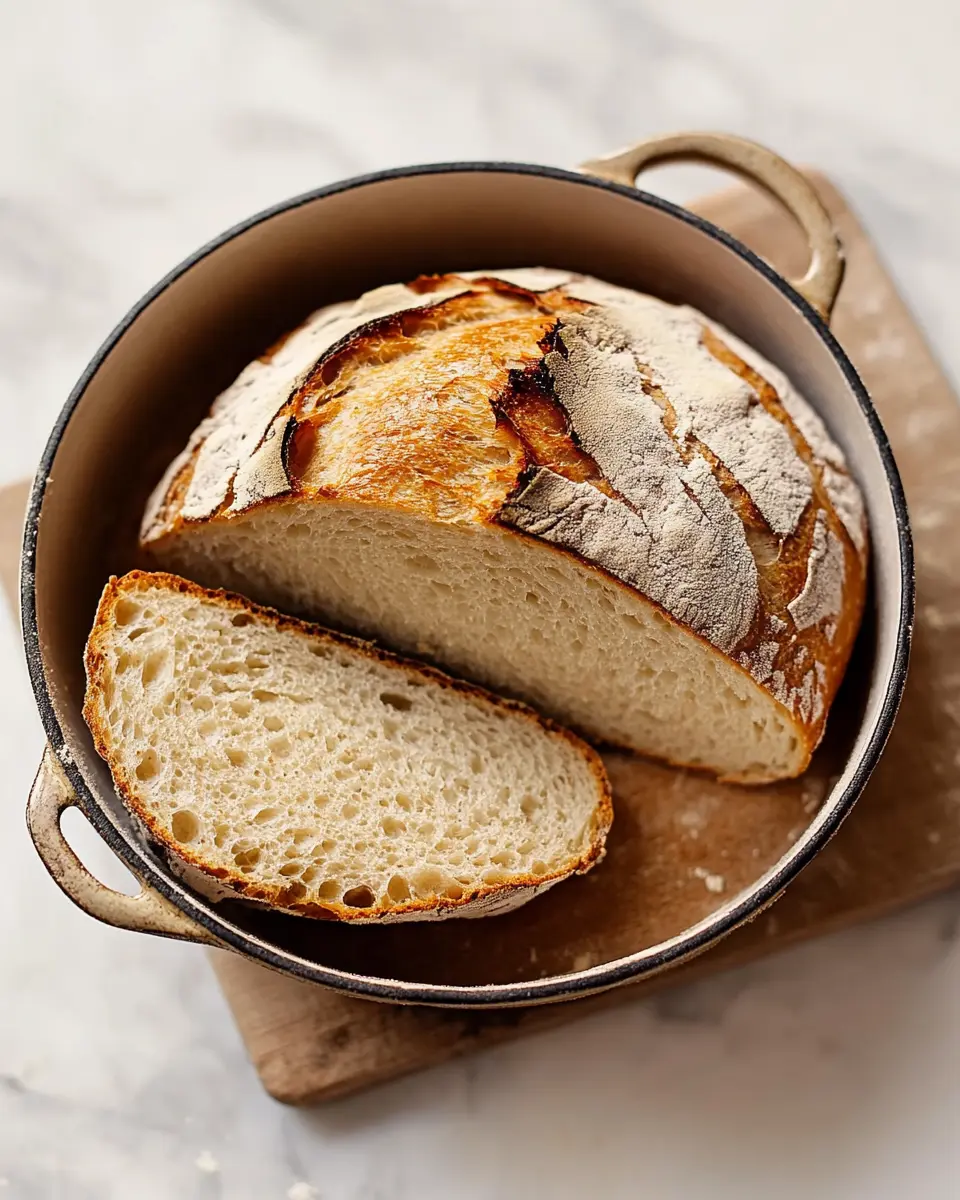
The Dutch Oven Sourdough Bread boasts a delightful flavor profile, with a perfect balance between tangy and subtly sweet notes. Its crusty exterior gives way to a soft, airy interior that is ideal for sandwiches or simply slathered with butter. Each bite is a testament to the magic of fermentation, providing a unique taste experience that store-bought options simply can’t match.
Emphasize the health benefits of homemade bread vs. store-bought
Homemade bread, especially this Dutch Oven Sourdough Bread, offers numerous health benefits compared to store-bought varieties. It often contains fewer preservatives and additives, allowing you to enjoy a cleaner, more natural product. Additionally, the fermentation process enhances nutrient absorption and may even improve gut health, making it a wholesome choice for your diet.
Personal anecdote about discovering sourdough
I still remember the first time I made sourdough bread. The process felt daunting, but as the dough rose and the aroma filled my kitchen, I was hooked. It was a moment of pure joy and discovery, realizing that I could create something so delicious and satisfying from just a few simple ingredients. That experience not only taught me the art of bread-making but also how rewarding it can be to share homemade food with loved ones.
Variations
Adding herbs for a flavor boost
Elevate your Dutch Oven Sourdough Bread by incorporating fresh or dried herbs. Rosemary, thyme, or basil can add an aromatic depth that complements the tanginess of the sourdough. Simply mix a tablespoon of your chosen herbs into the dough during the initial mixing stage for a delightful flavor enhancement.
Incorporating nuts or seeds for texture
For those who love a bit of crunch, adding nuts or seeds to your bread can create a wonderful contrast to its soft interior. Consider folding in chopped walnuts, sunflower seeds, or pumpkin seeds during the kneading process. This not only adds texture but also boosts the nutritional profile of your loaf.
Creating a whole wheat version
If you’re looking for a healthier alternative, you can easily create a whole wheat version of this sourdough bread. Substitute half of the all-purpose flour with whole wheat flour. Keep in mind that whole wheat flour absorbs more water, so you might need to adjust the hydration by adding a bit more warm water to achieve the desired dough consistency. This variation not only adds a nutty flavor but also increases the fiber content, making it a more wholesome choice.

Cooking Tips and Notes
Importance of an active sourdough starter
An active sourdough starter is essential for achieving the perfect rise and flavor in your Dutch Oven Sourdough Bread. Make sure to feed your starter regularly, ideally 4-6 hours before you begin baking. This ensures it’s bubbly and ready to work its magic, creating that signature tangy taste and airy texture.
Tips for flour measurement accuracy
Accurate flour measurement can make or break your bread. Using a kitchen scale is the best method, allowing you to measure precisely 3 cups of flour, which equals about 360 grams. If you don’t have a scale, fluff the flour in its container first, then spoon it into a measuring cup and level it with a knife to avoid packing.
Recommendations for kneading and shaping the dough
Kneading is key to developing gluten, which gives your bread structure. Aim for about 10 minutes of kneading until the dough is smooth and elastic. When shaping your loaf, be gentle to retain the air bubbles formed during fermentation. A well-shaped loaf will yield a beautiful rise and a lovely crumb in the final product.
Serving Suggestions
Pairing with butter and jam
There’s nothing quite like a warm slice of Dutch Oven Sourdough Bread spread with creamy butter and a dollop of your favorite jam. The crusty exterior and soft, airy interior make it an ideal canvas for rich, sweet flavors. Whether it’s a morning treat or a delightful afternoon snack, this combination is sure to please.
Using for sandwiches
The versatility of this bread shines when used for sandwiches. Its sturdy structure holds up beautifully against hearty fillings like roasted vegetables, turkey, or even a classic BLT. The unique tang of the sourdough adds an extra layer of flavor that elevates any sandwich to new heights.
Serving alongside soups and salads
Dutch Oven Sourdough Bread pairs exceptionally well with soups and salads, making it a perfect addition to any meal. The crusty loaf can be served alongside a steaming bowl of tomato soup or a fresh garden salad, allowing you to soak up every last drop. This combination not only enhances the dining experience but also adds a satisfying crunch and texture to your meal.
Time Breakdown
Prep time: 30 minutes
Getting started is quick and easy! In just 30 minutes, you can prepare the ingredients and mix them into a shaggy dough, ready for its first rise.
Cook time: 45 minutes
Once the dough has risen, baking it in the preheated Dutch oven takes about 45 minutes. This includes 30 minutes covered and an additional 15 minutes uncovered to achieve that perfect golden crust.
Rising time: 4-6 hours
The key to a successful loaf is patience during the rising phase, which lasts 4-6 hours. This allows the dough to double in size and develop flavor.
By managing your time effectively, you can enjoy fresh, homemade Dutch Oven Sourdough Bread with minimal fuss!
Nutritional Facts
Breakdown of calories and nutritional information per slice
Each slice of this Dutch Oven Sourdough Bread contains approximately 150 calories, making it a wholesome choice for any meal. With only 0.5g of total fat and no cholesterol, this bread fits well into various dietary preferences. The bread also provides a modest amount of protein at 5g per slice, along with essential carbohydrates.
Comparison with store-bought bread
When compared to store-bought bread, this homemade version often contains fewer preservatives and added sugars. The natural fermentation process of sourdough enhances nutrient absorption and gives it a unique flavor, setting it apart from many commercial options. Enjoying freshly baked bread not only tastes better but also contributes to a healthier lifestyle.
FAQ based on “People Also Ask” section
What is the best way to store sourdough bread?
To keep your Dutch Oven Sourdough Bread fresh, store it in a paper bag at room temperature for up to three days. If you need to keep it longer, consider slicing the bread and freezing it in an airtight container. This way, you can enjoy it later without sacrificing quality.
How do I know my sourdough starter is active?
An active sourdough starter should be bubbly and double in size after feeding, typically within 4-6 hours. You can also perform the “float test” by dropping a small spoonful of starter in water; if it floats, it’s ready to use!
Can I use whole wheat flour instead of all-purpose?
Yes, you can substitute whole wheat flour for all-purpose flour in your Dutch Oven Sourdough Bread. However, keep in mind that whole wheat flour absorbs more water, so you may need to adjust the hydration level by adding a bit more water to your dough. This substitution adds a nutty flavor and increases the fiber content.
Conclusion
Summarize the steps and benefits of making sourdough bread
Making Dutch Oven Sourdough Bread is a rewarding experience, combining simple ingredients and a straightforward process to create a delicious loaf. By mixing flour, water, sourdough starter, salt, and sugar, followed by kneading and allowing the dough to rise, you unlock a world of flavor. The baking method in a Dutch oven ensures a crusty exterior and a soft, airy interior, perfect for any meal.
Encourage readers to try the recipe and share their experiences
I encourage you to try this recipe and experience the joy of homemade bread. Whether you enjoy it fresh with butter or use it for your favorite sandwiches, the satisfaction of baking your own sourdough is unmatched. Don’t hesitate to share your baking journey and any tips you discover along the way!
Call to action for subscribing for more recipes and tips
For more delicious recipes and baking tips, be sure to subscribe to our newsletter. Join our community of homemade-food lovers and elevate your cooking game one loaf at a time!
PrintDutch Oven Sourdough Bread

This Dutch Oven Sourdough Bread is crusty on the outside and soft on the inside, perfect for sandwiches or enjoying with butter.
- Prep Time: 30 minutes
- Cook Time: 45 minutes
- Total Time: 6 hours 15 minutes
- Yield: 1 loaf
- Category: Bread
- Method: Baking
- Cuisine: American
- Diet: Vegetarian
Ingredients
- 3 cups all-purpose flour
- 1 1/4 cups warm water
- 1/2 cup sourdough starter
- 1 1/2 teaspoons salt
- 1 teaspoon sugar
Instructions
- In a large bowl, combine flour, water, sourdough starter, salt, and sugar. Mix until a shaggy dough forms.
- Knead the dough on a floured surface for about 10 minutes until smooth.
- Place the dough in a greased bowl, cover, and let rise for 4-6 hours until doubled in size.
- Preheat your oven to 450°F (232°C) with the Dutch oven inside.
- Shape the dough into a round loaf and let it rest for 30 minutes.
- Carefully remove the Dutch oven, place the dough inside, and cover.
- Bake for 30 minutes covered, then remove the lid and bake for an additional 15 minutes until golden brown.
- Let cool on a wire rack before slicing.
Notes
- Ensure your sourdough starter is active before using.
- For a tangier flavor, let the dough rise longer.
- Use a kitchen scale for accurate flour measurement if possible.